
Nature & Heritage

NARSINGHGARH

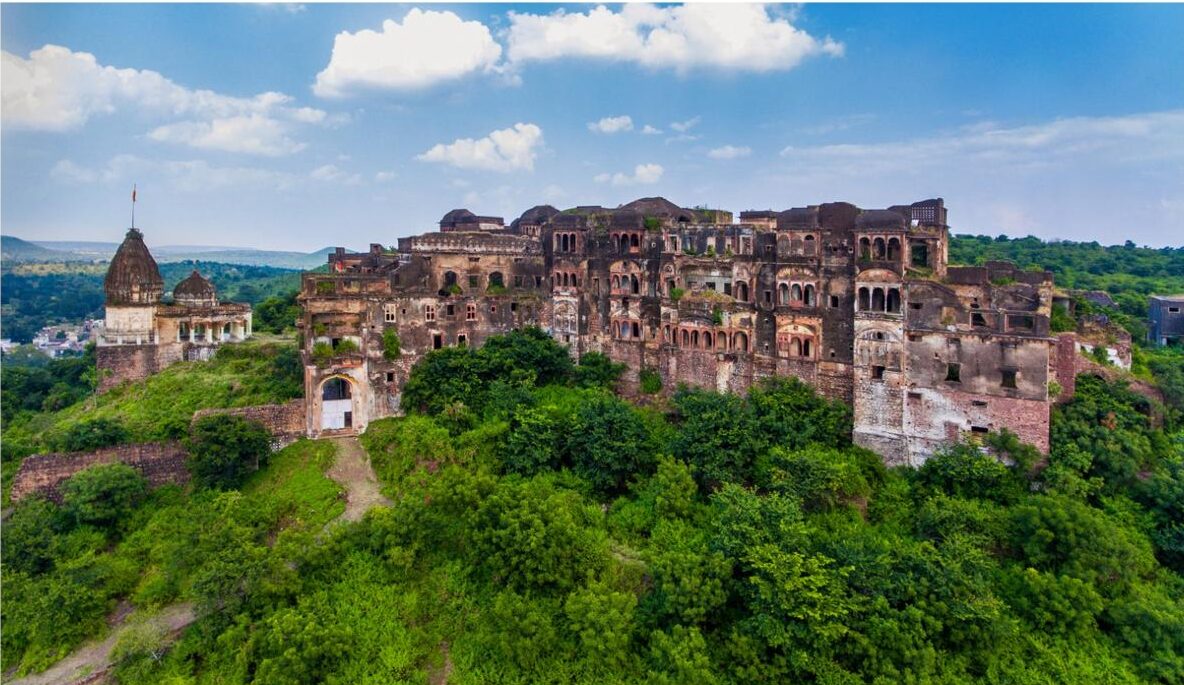
Narsinghgarh is a historic town located about 80 km from Bhopal in Madhya Pradesh, India. Known for its rich cultural heritage and scenic beauty, the town is surrounded by the Vindhya hills and lush forests. It was once the capital of a princely state and still boasts the grand Narsinghgarh Fort, an architectural marvel overlooking the town. The nearby Narsinghgarh Wildlife Sanctuary adds to its charm, offering a haven for nature lovers and wildlife enthusiasts. With its blend of history, nature, and local traditions, Narsinghgarh is a hidden gem worth exploring.

Narsinghgarh Fort

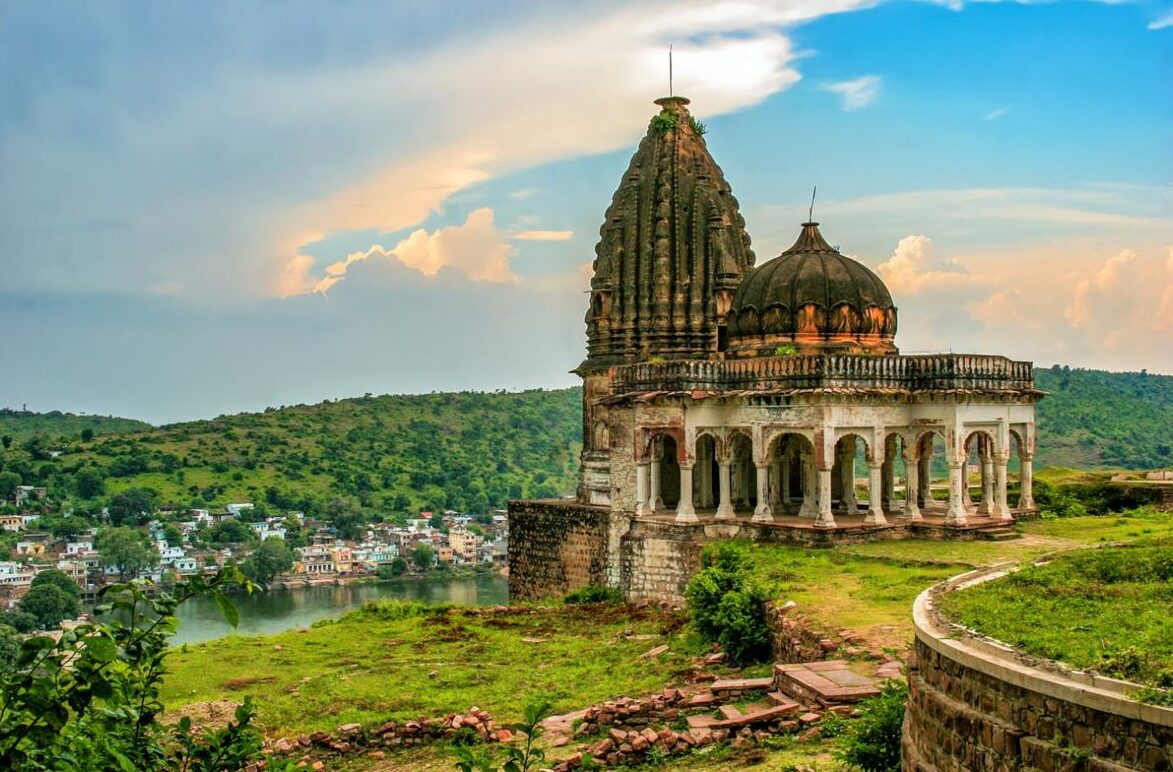
located in Rajgarh district of Madhya Pradesh, India, is a majestic hilltop fort built in the late 17th century by the rulers of the Narsinghgarh princely state. Often called the "Kashmir of Malwa" due to its scenic beauty, the fort combines Rajput and Mughal architectural styles and offers a commanding view of the surrounding forests, lakes, and hills.Spread over a large area, the fort once served as a royal residence and features intricately designed balconies, courtyards, and temples within its premises. Its strategic position and elegant construction reflect both military strength and artistic refinement. Today, Narsinghgarh Fort stands as a symbol of regional heritage, attracting history enthusiasts and tourists alike.
Bada Mahadev

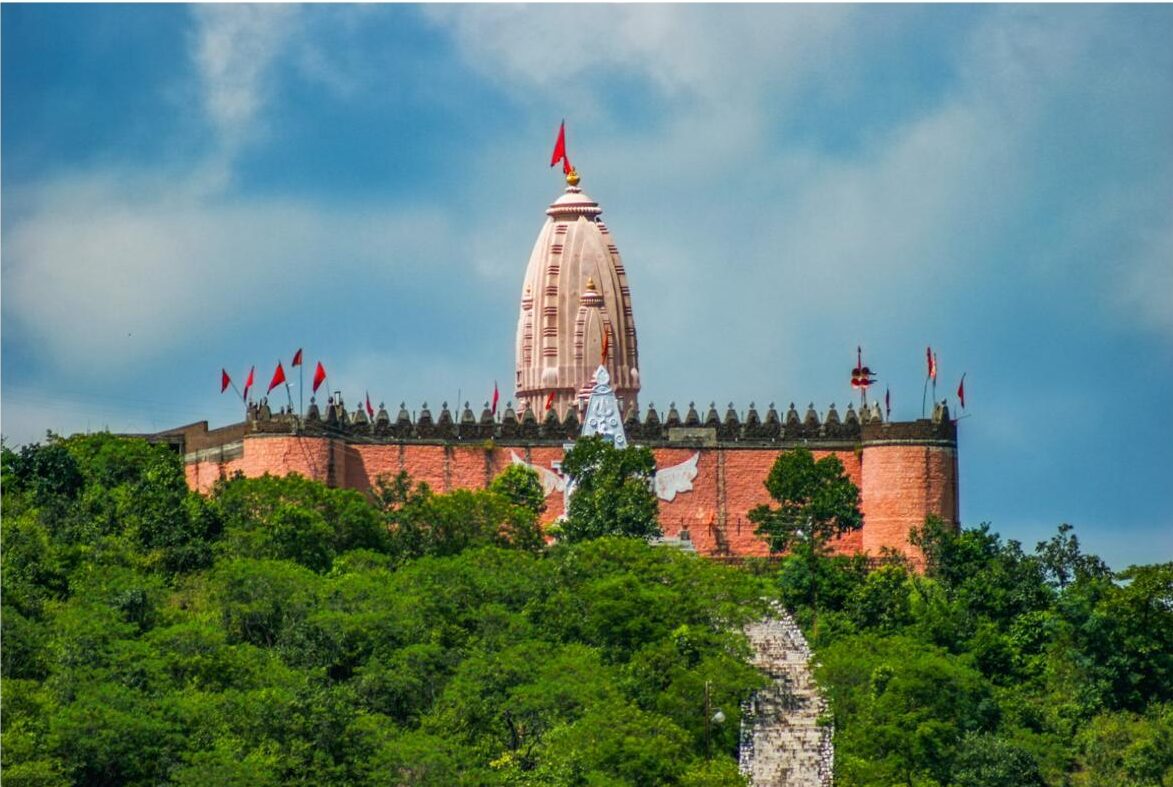
Bada Mahadev, also known as Baijnath Mahadev, is a venerable Lord Shiva temple perched on a lush hill overlooking Narsinghgarh town in Madhya Pradesh. Surrounding it is verdant greenery and waterfalls that enhance its tranquil spiritual setting . • The temple is believed to be over a thousand years old, originally established by the Saharia tribal community—locally known as "Topliya Mahadev" devotees • It was later re-established or renovated in the 17th century by Maharaja Mehtab Singh of Narsinghgarh, linking it to the broader heritage of the princely state • Panoramic views from the hilltop include views of town, the nearby fort, and surrounding hills—making it ideal for a reflective spiritual experience amidst nature. • The historic ambiance, combined with natural elements like the waterfall-fed greenery and sacred kund, adds layers of serenity and cultural richness.
Solah Khamb

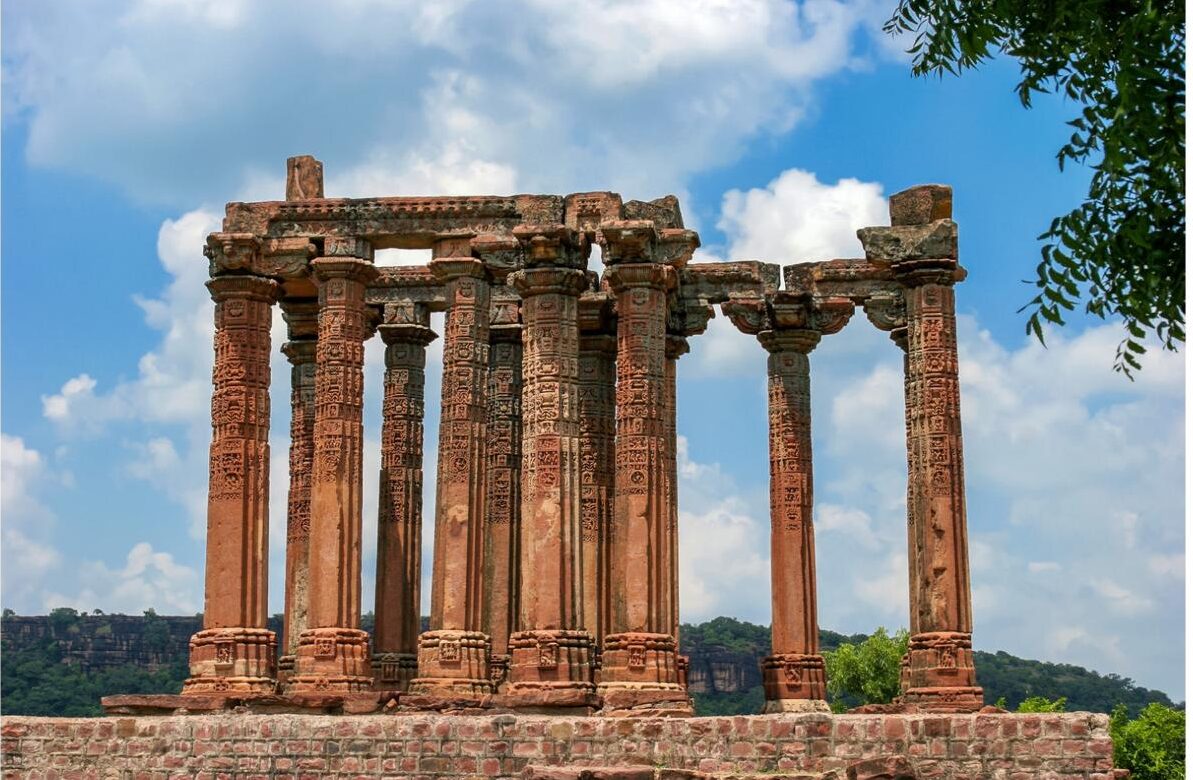
(also spelled SolahKhamba, meaning “Sixteen Pillars”) is an evocative archaeological relic located about 10–13 km from Narsinghgarh, in the village of Kotra (Bihar Kotra) in Rajgarh District, Madhya Pradesh . Dating to the 17th century, it was commissioned by Raja Syam Singh Khichi around 1700 AD. Crafted in Par¬mar‐period architectural finesse, it once featured a grid of sixteen intricately carved stone pillars—hence its name "SolahKhamb" Historical accounts suggest it might have been intended as the Kailash Mandap of a temple dedicated to Lord Shiva. However, the structure remained incomplete and suffered extensive damage during a Mughal invasion led by Haji Wali, in which Raja Syam Singh was reportedly killed in conflict. His grieving widow later erected the ShyamjiSanka Temple nearby in his memory. Today, only a few pillar bases and fragments remain, offering a haunting glimpse into its former glory. Set within forested terrain near the Chidikho Wildlife Sanctuary, the site draws interest for its historical value and quiet ambiance, especially for those exploring Narsinghgarh's rich cultural heritage
Jal Mandir

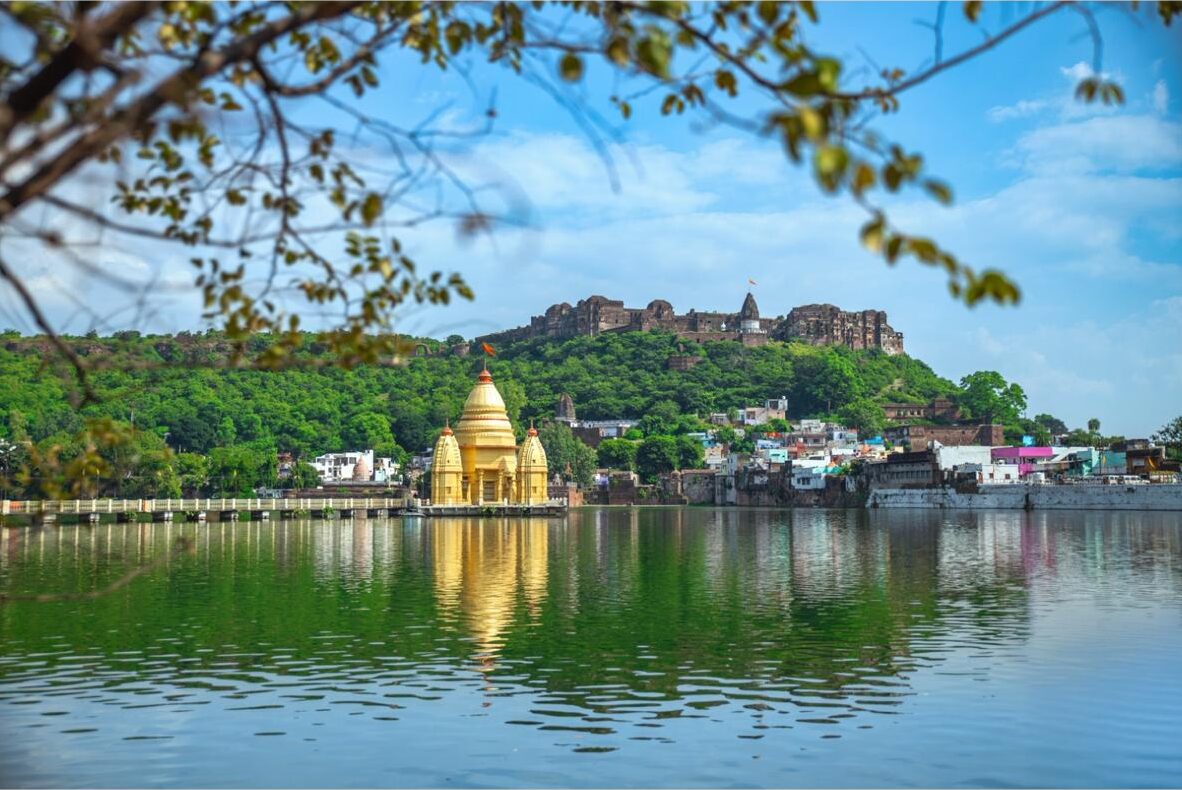
is a serene Shiva temple gracefully situated on Paras Ram Sagar Lake, founded in 1681 by Dewan Parasram, the town’s founder . Nestled in the heart of the lake, it's often admired from Narsinghgarh Fort, creating a stunning mirror image amidst rolling hills. The temple houses a Panchmukhi Shiva lingam and is accessed via a stone walkway built over the water. At night and during sunset, its reflection on the lake is especially enchanting—a scene many visitors cherish .
Chidi Kho

is a picturesque and serene natural spot located near Narsinghgarh in Madhya Pradesh. Nestled amidst dense forests and rocky terrain, it is a hidden gorge known for its scenic beauty, rich biodiversity, and tranquil surroundings. The name "Chidi Kho" literally means "Bird’s Gorge," and the area is a haven for birdwatchers and nature lovers, with numerous bird species inhabiting the region.Chidi Kho also forms part of the Narsinghgarh Wildlife Sanctuary, and its cliffs, streams, and lush greenery make it an ideal destination for eco-tourism, trekking, and photography. The location is especially enchanting during the monsoon, when waterfalls and natural springs come alive, enhancing the area's appeal.

Narsinghgarh Fort

located in Rajgarh district of Madhya Pradesh, India, is a majestic hilltop fort built in the late 17th century by the rulers of the Narsinghgarh princely state. Often called the “Kashmir of Malwa” due to its scenic beauty, the fort combines Rajput and Mughal architectural styles and offers a commanding view of the surrounding forests, lakes, and hills.Spread over a large area, the fort once served as a royal residence and features intricately designed balconies, courtyards, and temples within its premises. Its strategic position and elegant construction reflect both military strength and artistic refinement. Today, Narsinghgarh Fort stands as a symbol of regional heritage, attracting history enthusiasts and tourists alike.

Bada Mahadev

Bada Mahadev, also known as Baijnath Mahadev, is a venerable Lord Shiva temple perched on a lush hill overlooking Narsinghgarh town in Madhya Pradesh. Surrounding it is verdant greenery and waterfalls that enhance its tranquil spiritual setting . • The temple is believed to be over a thousand years old, originally established by the Saharia tribal community—locally known as “Topliya Mahadev” devotees • It was later re-established or renovated in the 17th century by Maharaja Mehtab Singh of Narsinghgarh, linking it to the broader heritage of the princely state • Panoramic views from the hilltop include views of town, the nearby fort, and surrounding hills—making it ideal for a reflective spiritual experience amidst nature. • The historic ambiance, combined with natural elements like the waterfall-fed greenery and sacred kund, adds layers of serenity and cultural richness.

Bada Mahadev

Bada Mahadev, also known as Baijnath Mahadev, is a venerable Lord Shiva temple perched on a lush hill overlooking Narsinghgarh town in Madhya Pradesh. Surrounding it is verdant greenery and waterfalls that enhance its tranquil spiritual setting . • The temple is believed to be over a thousand years old, originally established by the Saharia tribal community—locally known as “Topliya Mahadev” devotees • It was later re-established or renovated in the 17th century by Maharaja Mehtab Singh of Narsinghgarh, linking it to the broader heritage of the princely state • Panoramic views from the hilltop include views of town, the nearby fort, and surrounding hills—making it ideal for a reflective spiritual experience amidst nature. • The historic ambiance, combined with natural elements like the waterfall-fed greenery and sacred kund, adds layers of serenity and cultural richness.

Solah Khamb

(also spelled SolahKhamba, meaning “Sixteen Pillars”) is an evocative archaeological relic located about 10–13 km from Narsinghgarh, in the village of Kotra (Bihar Kotra) in Rajgarh District, Madhya Pradesh . Dating to the 17th century, it was commissioned by Raja Syam Singh Khichi around 1700 AD. Crafted in Par¬mar‐period architectural finesse, it once featured a grid of sixteen intricately carved stone pillars—hence its name “SolahKhamb” Historical accounts suggest it might have been intended as the Kailash Mandap of a temple dedicated to Lord Shiva. However, the structure remained incomplete and suffered extensive damage during a Mughal invasion led by Haji Wali, in which Raja Syam Singh was reportedly killed in conflict. His grieving widow later erected the ShyamjiSanka Temple nearby in his memory. Today, only a few pillar bases and fragments remain, offering a haunting glimpse into its former glory. Set within forested terrain near the Chidikho Wildlife Sanctuary, the site draws interest for its historical value and quiet ambiance, especially for those exploring Narsinghgarh’s rich cultural heritage

Jal Mandir

is a serene Shiva temple gracefully situated on Paras Ram Sagar Lake, founded in 1681 by Dewan Parasram, the town’s founder . Nestled in the heart of the lake, it’s often admired from Narsinghgarh Fort, creating a stunning mirror image amidst rolling hills. The temple houses a Panchmukhi Shiva lingam and is accessed via a stone walkway built over the water. At night and during sunset, its reflection on the lake is especially enchanting—a scene many visitors cherish .

Jal Mandir

is a serene Shiva temple gracefully situated on Paras Ram Sagar Lake, founded in 1681 by Dewan Parasram, the town’s founder . Nestled in the heart of the lake, it’s often admired from Narsinghgarh Fort, creating a stunning mirror image amidst rolling hills. The temple houses a Panchmukhi Shiva lingam and is accessed via a stone walkway built over the water. At night and during sunset, its reflection on the lake is especially enchanting—a scene many visitors cherish .

Chidi Kho

is a picturesque and serene natural spot located near Narsinghgarh in Madhya Pradesh. Nestled amidst dense forests and rocky terrain, it is a hidden gorge known for its scenic beauty, rich biodiversity, and tranquil surroundings. The name “Chidi Kho” literally means “Bird’s Gorge,” and the area is a haven for birdwatchers and nature lovers, with numerous bird species inhabiting the region.Chidi Kho also forms part of the Narsinghgarh Wildlife Sanctuary, and its cliffs, streams, and lush greenery make it an ideal destination for eco-tourism, trekking, and photography. The location is especially enchanting during the monsoon, when waterfalls and natural springs come alive, enhancing the area’s appeal.